
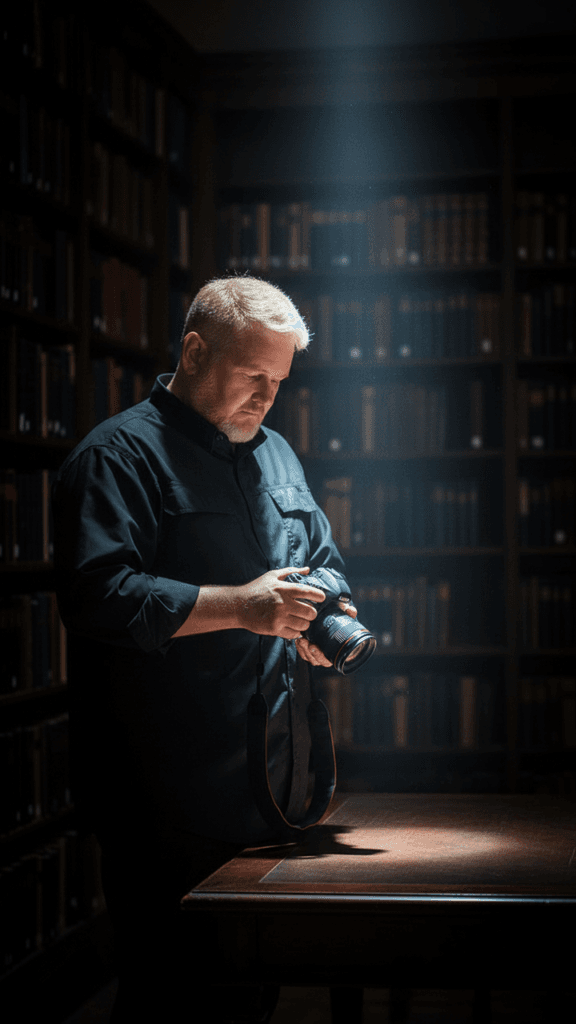
One of the questions I get asked as an author is this: Have you ever incorporated something that happened to you in real life into your novels?
The answer is yes. Absolutely.
I think most writers pull from real life in one way or another, whether they admit it or not. Sometimes it is a place they visited. And sometimes it is a conversation they overheard. Also sometimes it is a person they met, a feeling they could not shake, or a strange little moment that stayed in the back of their mind for years.
In my case, I have definitely taken real experiences, real places, real emotions, and real pieces of my life as a professional photographer and woven them into my novels.
Real Life Inside Double Exposure
In my spy thriller Double Exposure, there is a scene set in Cabo that comes directly from real life. The golf course is real. The setting is real. The experience of playing golf there is very much based on what it is actually like.
That is one of the great joys of writing fiction. You can take something you personally experienced, something ordinary, beautiful, strange, or memorable, and then turn the volume up just enough to make it fit inside a thriller.
That Cabo scene is not just there for decoration. It adds atmosphere. And it gives the story texture. Also it helps the reader feel like they are standing in a real place, because in many ways, they are.
As a photographer, I have spent nearly 50 years paying attention to details. Light, mood, location, expression, personality, and the little things most people walk past without noticing. That habit follows me into writing. When I describe a place, I am not just making it up from thin air. I am often pulling from things I have seen, felt, photographed, or experienced.
Camera Gear, Suspicion, and Story Ideas
There are also pieces of the prequel to Double Exposure that are rooted in reality.
For example, the idea of using camera gear as a way to hide or move something unusual came from my knowledge of professional photography equipment. Now, let me be very clear, I never actually snuck a prohibited item onto a plane. My attorney, my wife, and my common sense would all like that stated plainly.
But the concept itself came from real life.
Professional camera gear can look strange to people who are not familiar with it. Cases, lenses, metal parts, brackets, cables, triggers, flashes, and all sorts of odd-looking equipment can make someone stop and take a second look. Years ago, that very thing happened to me. Someone looked at my camera equipment and thought it might be something it was not.
That moment stayed with me.
As a writer, the question becomes, “What if?”
What if someone used that confusion on purpose? And what if a professional photographer had access to places other people could not reach? And what if a camera was more than a camera? Finally, what if the person behind the lens was not just taking pictures?
That kind of question is where thrillers are born.
Order Double Exposure Here: https://a.co/d/0jjhtsVu
Why Photography Fits So Well in a Thriller
One of the reasons photography works so well inside a thriller is because photographers are often allowed into spaces where other people are not.
If you have a camera around your neck, enough confidence, and the simple words, “I’m the photographer,” doors tend to open. People step aside. Security relaxes. Guests ignore you. Important people keep talking because they assume you are focused on the pictures.
A photographer can stand in the middle of a room and become almost invisible.
That idea became a major part of the foundation for Double Exposure. Reed Sawyer, the main character, is a professional photographer. But his world is far more dangerous than weddings, portraits, or commercial assignments. In his case, photography becomes the perfect cover.
That idea did not come from a spy manual. It came from a lifetime of being a photographer and understanding how people react when someone is holding a camera.
Zero Exposure Is My Most Personal Book
Then there is Zero Exposure, which may be the most personal thing I have written.
That book is built around my life as a professional photographer and author. It reflects what it feels like to photograph people, to read personalities, to capture emotion, and to spend your life trying to create images that matter.
For nearly 50 years, I have photographed people. I have watched how they carry themselves, how they try to hide insecurity, how they light up when they feel seen, and how a single expression can tell an entire story. That experience shaped me as a photographer, but it also shaped me as a writer.
In Zero Exposure, the thriller elements are fictional, of course. Mostly. Allegedly.
But the emotional foundation is real. The photography world is real. The pressure of creating something meaningful is real. The strange overlap between imagination and reality is very real to me.
Photography taught me how to see people. Writing taught me how to reveal them.
Order Zero Exposure here: https://a.co/d/07cTdAHL
Real Life Makes Fiction Feel True
I do not believe fiction has to be completely true to feel honest. In fact, some of the best fiction is built from a mix of truth and imagination.
A real location gives the story weight. A real emotion gives the scene depth. A real-life detail makes the reader lean in and think, “That feels believable.”
That is what I try to do in my books. I take pieces of my life, my photography career, my travels, my observations, and my imagination, then I twist them into something bigger, stranger, and more suspenseful.
That is where Double Exposure and Zero Exposure both live, somewhere between what happened, what could have happened, and what probably should never happen.
And honestly, that is the fun part.
Because when readers ask, “Did that really happen?”
My answer is usually, “Well… parts of it.”
Mostly.
Allegedly.