
What happens when you take the villain from Double Exposure and hand him the microphone?
That is exactly what I’m doing with Counter Exposure.
If you read Double Exposure, then you already know Barry Cox as the mastermind in the shadows, the man pulling strings, shaping outcomes, and standing as the greatest threat Reed Sawyer must face. In that story, Barry is the villain. Reed is the man trying to survive, uncover the truth, and stop something much bigger than himself.
But Counter Exposure changes the lens.
This book tells the story again, not as a simple retelling, but as a complete shift in perspective. This time, the story unfolds through the eyes of Barry Cox. This time, readers will see the events, decisions, and motives from the mind of the man who believed he was the one holding the world together.
And that is where things get dangerous.
Because Barry Cox does not see himself as the villain.
He sees himself as the rational one. The disciplined one. The man willing to make hard decisions while others get distracted by emotion, conscience, or chaos. In Barry’s view, Reed Sawyer is not a hero. Reed is the problem. Reed is reckless, unpredictable, and dangerously willing to trust his own moral instincts over the structure Barry has spent years protecting.
That is the heartbeat of Counter Exposure.
It is a story built on perspective. On control. On the terrifying possibility that the man you feared most may be able to explain himself so well that, for a moment, you start to understand him.
Maybe even agree with him.
That is what fascinates me about this book.
In Double Exposure, readers were inside the tension and danger from Reed’s side. They experienced the confusion, the pursuit, and the growing realization that something massive and hidden was moving behind the scenes. In Counter Exposure, readers step behind that curtain. They enter Barry’s world of precision, systems, order, and calculated judgment. They see how he interprets the same events, and how easily a man can justify nearly anything when he believes the alternative is disorder.
Barry is not twirling a mustache and tying people to railroad tracks.
He is far more dangerous than that.
He is intelligent. Organized. Patient. He believes in structure. Also he believes weakness creates risk. And he believes sentiment gets people killed. And most of all, he believes that what he is doing is necessary.
That is what makes Counter Exposure so compelling to write.
This is not just a book about a villain. It is a book about how villains often do not think they are villains at all. They believe they are protecting something valuable. Also they believe they are seeing clearly while everyone else is clouded by emotion. And they believe history would justify them, if only history were written by the right people.
And in Counter Exposure, Barry Cox finally gets his chance to write the history.
Readers will return to the world of Double Exposure, but everything will feel different. Familiar moments will take on new meaning. Assumptions will be challenged. Motives will be recast. Scenes that once looked straightforward will reveal deeper strategy, hidden calculations, and a very different version of truth.
That is one of the things I love most about storytelling. Change the perspective, and you change everything.
For readers who enjoyed the cat-and-mouse tension of Double Exposure, Counter Exposure will offer a deeper dive into the machinery behind the story. For readers who love psychological tension, shifting loyalties, and morally complicated characters, this book is going to be a fascinating ride.
You may still hate Barry Cox when you finish.
Honestly, you probably should.
But I also suspect there will be moments when you understand him more than you expected to, and that may be the most unsettling part of all.
Sneak Preview from Chapter One
Here is a first look at Counter Exposure:
Chapter 1
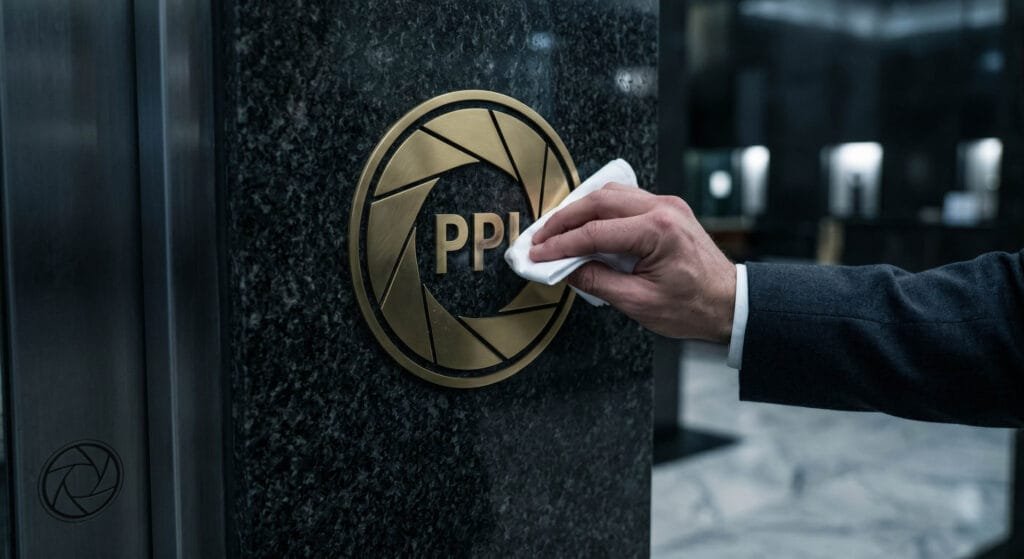
Barry Cox approached the headquarters of the Professional Photographers Institute on a Saturday at exactly 3:12 p.m. On weekdays he arrived at 7:46 a.m., unless travel required otherwise. Weekends followed a different rhythm, one shaped by the field rather than the office. The building rose above the street in glass and steel, polished enough to reflect the bold Manhattan light in long vertical strips. Beside the entrance, the brass PPI logo had already caught the sun, a clean circular emblem with the letters PPI set in the bright center of a camera aperture, framed by seven broad blades inside a thick outer ring. Seven blades. The mark of legitimacy, the symbol of PPI’s public face, the respectable side that dealt in photographers, education, and craft.
He slowed when he reached it.
There was a smudge on the letter I.
Most people would not have seen it. A thumbprint, maybe. A streak of city dust. Nothing more than a faint blur on polished brass. Barry pulled a folded white handkerchief from his inside pocket, wiped the mark clean, then checked the surface again before putting the cloth away.
Better.
He stood there another second, not admiring the building, but confirming what he already knew. The logo was centered. The brass was clean. The glass had been done before dawn. The guards at the front desk were in place. Order, once established, required maintenance. Left alone, things drifted.
That was true of buildings. It was true of institutions. It was especially true of people.
Reed Sawyer had started to drift.
Barry stepped through the second door from the left, as he always did. His hand closed around the cool steel handle, and his eyes dropped, briefly, to the small marking etched low into the frame. The same emblem, reduced in size and easy to miss, except this version carried only six aperture blades.
Most visitors never noticed it. If they did, it meant nothing, just another design detail worked into the entryway branding. But inside the Institute, details mattered. Seven blades marked the Professional Photographers Institute, the respectable organization photographers knew through workshops, certifications, trade conferences, and a century of polished credibility. Six blades signaled something else entirely. Six blades meant the Private Protection Initiative, the hidden structure beneath the public one, where cameras opened doors, gathered intelligence, and turned ordinary access into leverage. The distinction was subtle by design, invisible to outsiders, obvious to anyone trained to see it.
He crossed the lobby without breaking stride. Marble floors. Quiet lighting. Receptionists already at their stations. Framed prints on the walls, landscapes, portraits, architecture, carefully chosen to suggest culture and credibility. The Professional Photographers Institute had spent generations building a name people trusted. It began in 1868 as a trade organization, a small alliance of studio owners protecting their business from outside threats. By 1880 it had become something more stable, more polished, more useful. Publicly, it taught photographers how to see. Privately, under the same initials and behind a cleaner name, it trained operatives to use what photographers saw. The Professional Photographers Institute built trust. The Private Protection Initiative spent that trust where no one thought to look.
Barry respected that history because it had never confused appearance with purpose.
Traditional intelligence services made noise. They attracted committees, rivalries, politics, and ambitious men who liked hearing themselves speak. PPI had chosen a better method. Quiet people. Patient people. Men and women with cameras who could enter rooms unnoticed and leave with everything. A photographer was welcomed where other observers were screened, delayed, or denied. Weddings. Embassies. Fundraisers. Airports. Private estates. If someone carried a camera, people assumed they belonged.
That assumption had protected the Institute for years.
Why This Book Matters
I think one of the most interesting things a thriller can do is force readers to question what they thought they already knew.
Counter Exposure is designed to do exactly that.
It revisits the world of Double Exposure, but it does so through a darker, colder, and far more controlled lens. Barry Cox is not interested in winning sympathy. He is interested in proving that his actions made sense. That his decisions were necessary. That Reed Sawyer was never the hero of this story, at least not from where Barry stands.
And that makes for a very different kind of thriller.
I’m excited for readers to step into Barry’s mind, revisit this dangerous world from the inside, and decide for themselves what truth really looks like when every side believes it is right.
One thing is certain, Counter Exposure is not just another pass through familiar territory. It is a confrontation with perspective itself.
And in this story, perspective may be the most dangerous weapon of all.