
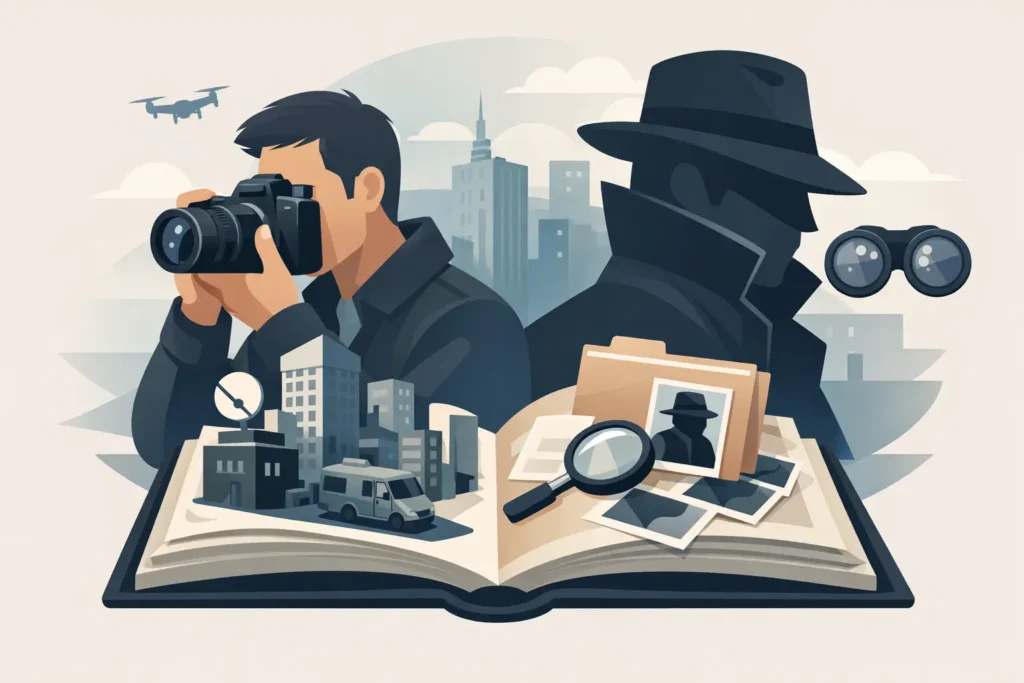
A camera bag can get a person through doors that would stop almost anyone else. A photographer is expected to notice the room, ask for a better angle, wait near the important people, and leave with images nobody thinks twice about. That is the quiet charge at the center of books about photographer spies: the camera is not a disguise bolted onto the story. It is a believable reason to be close when something dangerous happens.
The best versions of this premise do more than put a camera in a spy’s hands. They understand that photography is a profession built on observation, patience, timing, and trust. Those are useful skills when the assignment is a wedding, a corporate event, or a magazine feature. They become life-saving skills when the subject is lying, the client has secrets, and one frame contains evidence someone is willing to kill for.
More Than a Camera in a Spy Story
A photographer-spy thriller works when the profession shapes the plot from the first chapter onward. A protagonist who photographs people for a living does not enter a space the way a soldier, detective, or diplomat does. They scan the light. And they notice where the security cameras are aimed. They recognize which assistant is actually running the room and which person keeps avoiding the lens.
That perspective gives the story its own rhythm. A photographer waits for a face to change, a hand to linger, or a door to open. In espionage, those small moments can reveal a relationship, a threat, or a way out. The character is not merely collecting information. They are deciding what matters before the moment disappears.
Credible Access Creates Better Suspense
Readers of spy fiction are rightly suspicious of convenient access. If an ordinary civilian wanders into a secure building without a convincing reason, the tension can evaporate. But photography often provides a practical invitation into controlled spaces: press events, private celebrations, executive offices, restricted work sites, political gatherings, travel environments, and homes where strangers would otherwise never be welcomed.
That access is not unlimited, and that limitation is where the story gets good. A photographer may be allowed in the lobby but not beyond the next checkpoint. They may be trusted to photograph a visiting executive but watched by security the entire time. They may have a legitimate credential while carrying an illegitimate purpose.
Every assignment becomes a balancing act. Push too hard for a shot, and the subject becomes suspicious. Stay too passive, and the evidence walks out of frame. The camera gives the protagonist a reason to be there, but it also makes them visible.
Seeing Is Not the Same as Understanding
A photograph feels like proof. Sometimes it is. Sometimes it is a beautifully composed lie.
That uncertainty is a gift to a suspense writer. An image can show two people meeting, but not what they said. It can capture a handoff, but not what changed hands. A reflection in a window may reveal the one person who was never supposed to be present. A blurred background can hold the clue that changes everything, if the photographer knows where to look.
The strongest stories use photographs as objects with consequences. A memory card can be copied. Metadata can expose a location. A cropped image can hide the truth. A file sent to the wrong person can turn an assignment into a manhunt. The image is never just a clue on a detective board. It is a piece of volatile evidence that can be stolen, altered, denied, or used against the person who made it.
What Makes Books About Photographer Spies Believable
Believable tradecraft does not require pages of technical jargon. It requires the right details in the right moments. Readers should feel that the author understands how a working photographer moves through an assignment: the gear check before leaving, the conversation that gets a reluctant subject to relax, the awareness that one dead battery can ruin a day, and the habit of looking for an exit without announcing it.
Realism also comes from the awkward parts of the job. Photography can mean standing for hours, traveling light, making quick decisions under lousy conditions, and working around people who do not want to be photographed. A spy plot should not erase those pressures. It should use them.
A long lens might draw attention where a smaller camera would not. And a photographer who stops to adjust exposure can miss a crucial exchange. A subject may demand the files immediately. An image that looks perfect on a camera screen may reveal a problem only later, on a larger display. Those practical complications make the danger feel earned rather than manufactured.
That is part of the thinking behind Double Exposure, where photographer and covert operative Reed Sawyer discovers that the ability to capture a moment does not guarantee he can control what that moment sets in motion. A camera can document the truth. It can also make its owner the only person who knows where the truth is hiding.
The Human Cost Behind the Lens
The most memorable photographer-spy stories are not only about missions. They are about the strain of being trained to observe without being observed.
Photography requires a kind of intimacy. Even in a quick portrait session, the photographer studies a person’s expression, posture, habits, and defenses. Espionage asks the protagonist to turn that awareness into an advantage. The moral tension arrives when the person in the viewfinder stops being a subject and starts becoming someone the protagonist cares about.
This is where the premise can carry real emotional weight. Is the photographer documenting a target, protecting a friend, or exploiting someone’s trust? Does the assignment require them to take a picture they know will ruin a life? Can they walk away from evidence because publishing it would put innocent people in danger?
There is no single correct answer, and that is the point. A clean-cut hero who never hesitates can be entertaining, but a protagonist forced to choose between the assignment and the person standing in front of the lens has more to lose. Suspense becomes personal when the picture is not simply valuable. It is devastating.
When the Premise Needs Restraint
Like any thriller device, the photographer-spy angle can become too convenient. Not every photograph should contain a hidden villain in the corner. Not every camera should be a gadget cabinet. And not every photographer needs to be a combat expert who can outrun a helicopter after lunch.
A more grounded approach is usually more tense. Let the protagonist make mistakes. And let them use their professional instincts instead of impossible technology. Let the danger grow because they captured something real, then made one understandable decision about what to do next.
The camera should create complications as often as it provides answers. It can be fragile, conspicuous, traceable, and full of files that need protecting. In the wrong hands, it is evidence. In the right hands, it may still be a liability.
Why This Thriller Premise Stays With Readers
A photographer records what happened. A spy survives by deciding what can be revealed. Put those roles in the same character, and every image carries a question: what did they see, what did they miss, and who will come looking once the shutter clicks?
That question is why this corner of the thriller shelf has such lasting appeal. It makes danger tangible. It turns an ordinary professional skill into a source of access and vulnerability. And it reminds us that the most dangerous secret in the room may not be the one everyone is trying to hide. It may be the detail sitting quietly in the background, waiting for somebody sharp enough to notice it.
PREORDER Zero Exposure now. The Exciting Prequel to Double Exposure and Book Zero in the Exposure Series: https://a.co/d/02vJWmGZ