
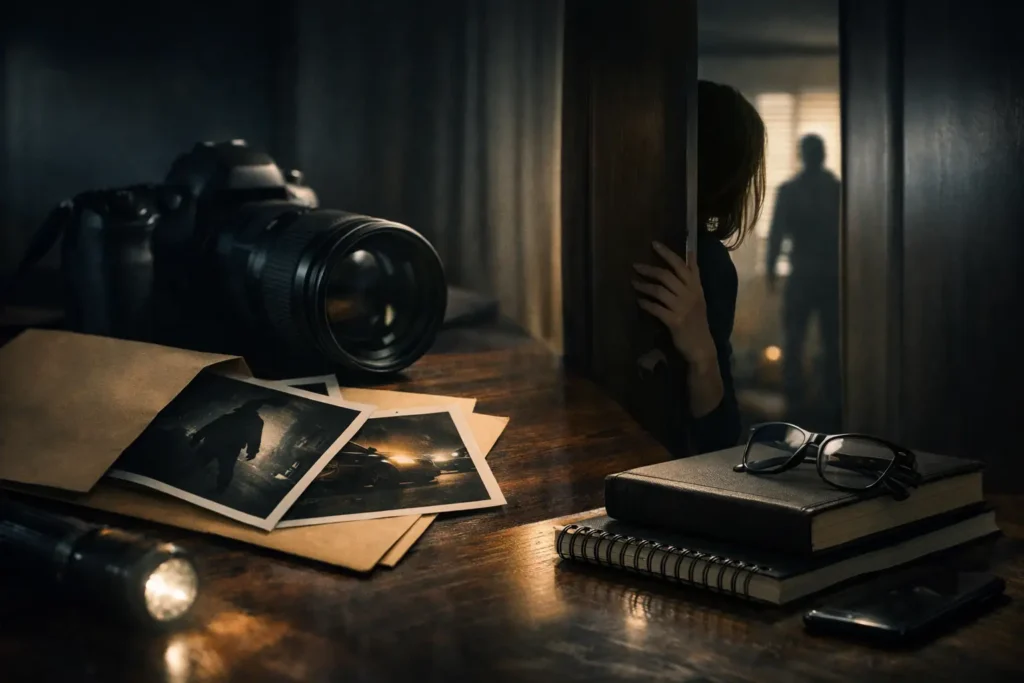
A camera can record a face, a place, or a moment that passes before anyone has time to think. It can also leave out the one detail that changes everything. That tension sits near the heart of this Zero Exposure review: not simply what a thriller reveals, but what it deliberately keeps just beyond the frame.
A true story. Mostly. Allegedly. Don’t check the metadata.
That is not a claim about the events in the novel. It is a useful reminder, though, that fiction works best when it feels close enough to real life to make a reader glance twice at an ordinary detail. A hotel hallway. A file with the wrong date. A photograph that seems perfectly ordinary until it doesn’t.
A Zero Exposure Review Needs One Disclosure
An independent reviewer can tell you whether a book worked for them. As the author, I can’t pretend to occupy that chair. What I can offer is a candid look at the intentions behind Zero Exposure, the kinds of readers it may suit, and the storytelling choices that shaped it.
I’ve spent more than four decades working as a professional photographer. That career taught me that visual evidence is rarely as tidy as people think. A photograph can be accurate and still incomplete. The lens records what it sees from one position, at one instant, under one set of conditions. Move a few feet to the left, change the light, or wait one second, and the story can look entirely different.
That is fertile ground for suspense.
The title Zero Exposure naturally suggests photography, but it also points toward the human side of being unseen, unprepared, or cut off from the information needed to make a sound decision. A good thriller puts someone in that uncomfortable position. The character has enough evidence to know that something is wrong, but not enough to understand the full danger. The reader gets to live in that gap for a while.
The Kind of Tension This Story Pursues
Thrillers can create momentum in many ways. Some rely on a huge body count or an ever-larger explosion. Those stories have their place, but they are not the only way to keep pages turning. In Zero Exposure, the goal was tension built from uncertainty, consequence, and the uneasy feeling that a small detail may matter far more than it first appears.
The most effective suspense often starts quietly. Somebody notices something out of place. An explanation almost fits, which is often more troubling than one that makes no sense at all. A person makes a reasonable choice and learns that reason is not always enough protection.
That approach asks more of the story than simply putting its characters in motion. The pressure has to come from believable circumstances. Decisions need consequences. Locations need to feel like places real people might enter, work in, travel through, or try to leave in a hurry.
Readers who enjoy international intrigue, secrets with real-world texture, and ordinary people facing situations that are anything but ordinary may find that rhythm appealing. Readers looking for a nonstop parade of action scenes may find the pace different in spots. Suspense needs room to breathe. A quiet scene can carry just as much danger as a chase when the reader understands what could be lost.
Why Photography and Suspense Belong Together
Photography is often treated as decoration in fiction. A character owns a camera, takes a few attractive pictures, and the story moves on. My experience has made that difficult to accept. Cameras are tools, certainly, but they also change how people observe the world.
A photographer learns to pay attention to edges. The main subject is rarely the only thing worth seeing. There may be a reflection in a window, an object in the background, a hand entering the corner of a frame, or a shadow that doesn’t belong. Sometimes it is nothing. Sometimes it is the first loose thread in a much larger problem.
That habit of looking closely is useful in a suspense novel because characters must often work with imperfect information. They notice, interpret, misinterpret, and occasionally wish they had paid closer attention ten pages earlier. No special technical knowledge is required from the reader. The details should serve the story, not turn it into a camera manual with better weather.
Real photography also brings limits, and limits create drama. Low light obscures details. Distance changes perspective. A photograph cannot capture what happened just before or after the shutter clicked. The image may offer a clue, but it cannot provide a complete confession. Fiction has a way of making that frustrating fact rather entertaining.
Believability Is More Than a Location Name
A suspense story can visit compelling places, but a list of airports and street names does not create authenticity. Readers recognize the difference between a setting that has been observed and one that has been assembled from a map, a menu, and a confident paragraph.
The travel, security, and photography experience behind my work informs the atmosphere of Zero Exposure. It affects practical details: how a location feels at a particular hour, how people behave when they are tired or alert, and how quickly a normal routine can become complicated. The purpose is not to show off research. It is to help the reader trust the ground beneath the characters’ feet, even when that ground is about to shift.
Authenticity also includes emotional behavior. Competent people can make mistakes when the stakes rise. Fear does not always look like panic. It may look like denial, impatience, a bad joke at the wrong moment, or the stubborn refusal to leave a question unanswered.
Those small human reactions matter. A conspiracy can be clever, but a reader stays with a story because the people caught in it feel recognizable.
What Readers Can Expect From Zero Exposure
This is a thriller built for readers who enjoy mystery threaded through suspense rather than explanations handed out at the door. It values pace, but it also takes time to let questions gather weight. The story is designed to keep the reader looking at the evidence from more than one angle.
There are trade-offs in that choice. A reader who wants every mystery resolved immediately may prefer a more direct style. On the other hand, readers who enjoy putting pieces together, revising their assumptions, and discovering that an early detail had a second meaning may feel right at home.
The book is also written to be accessible. Technical material should add texture without requiring a background in photography, travel, or security work. The goal is always the same: keep the story moving, keep the characters human, and let the details earn their place.
That last point is one I take seriously. A thriller can become too clever for its own good if every scene exists only to hide information from the reader. Mystery needs fairness. The clues do not have to announce themselves with a brass band, but they should belong to the story. When a revelation arrives, it ought to feel surprising first and inevitable a moment later.
The View From Behind the Lens
Writing Zero Exposure gave me a chance to bring two long-running interests into the same frame: the craft of suspense and the way photographers learn to see. Both demand patience. Both reward attention. And both can make an innocent-looking detail feel suspicious for the rest of the afternoon.
That is the pleasure I hope the book offers. Not just a sequence of events, but the experience of watching a picture develop slowly enough for its hidden shapes to emerge. The first look is rarely the whole story.
If that sounds like your kind of suspense, Zero Exposure is waiting in the wings, along with the other stories on this site. And if you enjoy a few behind-the-scenes notes about fiction, photography, and the odd detail that refuses to behave, the newsletter is a good place to keep the conversation going.
Zero Exposure is Coming out on September 16, 2026. Pre-Order today here: https://a.co/d/01ZBFy5Z